How Does Inflation Actually Work?
What pushes prices up, who measures it, and why a little inflation is the goal.
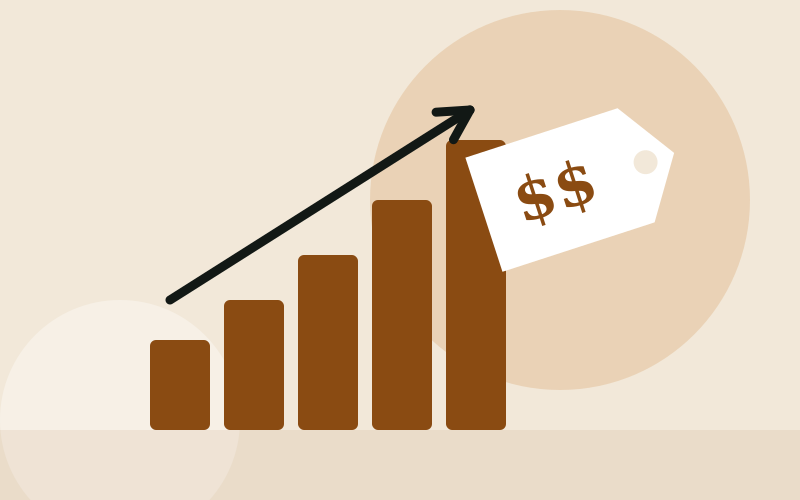
Inflation is a general rise in prices across the economy, which means each unit of money buys a little less over time. It usually happens when demand outpaces what the economy can produce, when costs rise, or when people expect prices to keep climbing.
Prices up, purchasing power down
Inflation isn’t one product getting more expensive — it’s the average price of a broad basket of goods and services rising. If inflation is 3% for a year, something that cost $100 costs about $103 a year later.
The flip side is purchasing power. Cash that sits still loses a bit of what it can buy every year inflation is positive.
The three usual causes
Demand-pull: households, businesses and governments try to buy more than the economy can produce, so sellers raise prices.
Cost-push: key inputs like energy or wages get more expensive, and firms pass those costs on. Expectations: if everyone expects prices to rise, workers ask for higher pay and firms raise prices in advance, which can make inflation self-reinforcing.
How it’s measured
Statistics agencies track the price of a representative basket — food, housing, transport, healthcare and more — and compare it over time. The best-known gauge is a consumer price index (CPI).
“Core” inflation strips out volatile items like food and energy to show the underlying trend more clearly.
Why central banks aim for a little
Many central banks target low, stable inflation — often around 2% — rather than zero. A small positive rate gives room to cut interest rates in a downturn and helps avoid deflation, where falling prices lead people to delay spending.
When inflation runs above target, central banks typically raise interest rates to cool demand.
To compare money across years, adjust for inflation. A raise that’s smaller than the inflation rate is, in real terms, a pay cut.
Frequently asked questions
Is inflation always bad?
Not at low, steady levels. Problems come when it’s high or unpredictable, because it erodes savings and makes planning harder.
Who benefits from inflation?
Borrowers with fixed-rate debt, since they repay with money that’s worth less. Savers holding cash tend to lose out.
This guide explains a general concept; it isn’t a recommendation to buy, sell or borrow. For decisions about your own money, consider speaking with a licensed financial professional.