How to Read a Company’s Balance Sheet
Assets, liabilities and equity in plain language.
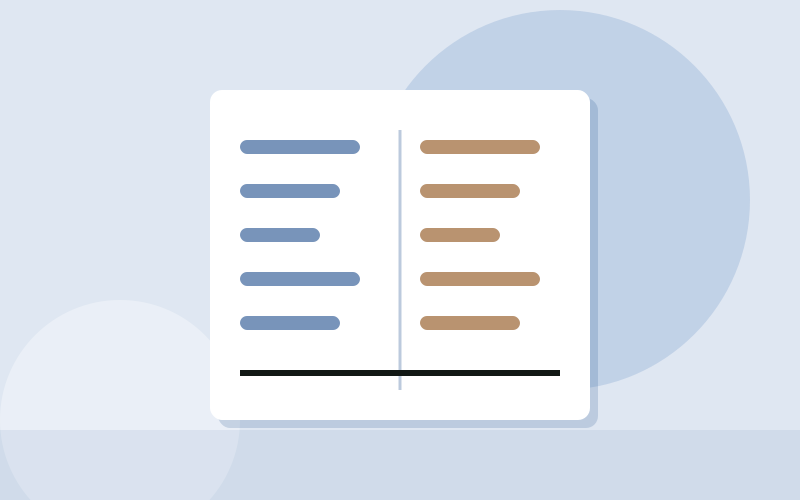
A balance sheet is a snapshot of what a company owns (assets), what it owes (liabilities) and what’s left for shareholders (equity) on a specific date. It always balances: assets equal liabilities plus equity.
The three parts
Assets include cash, money customers owe, inventory, buildings and equipment, and intangible items such as patents.
Liabilities include bills to suppliers, loans and bonds. Equity is the remainder — the owners’ claim after all debts.
Current vs. long-term
Current items are expected to turn into cash or be paid within a year; long-term items stretch beyond that.
Comparing current assets with current liabilities shows whether a company can comfortably cover its near-term bills.
A few simple checks
Debt-to-equity compares borrowing with the owners’ stake; a high ratio means more financial risk.
Look at trends across several years rather than one snapshot, and read it alongside the income statement and cash-flow statement.
A profitable company can still get into trouble if it runs out of cash. The balance sheet and cash-flow statement show what profits alone don’t.
Frequently asked questions
Where do I find a company’s balance sheet?
Public companies publish it in their annual and quarterly reports, usually on their investor-relations page.
Is book value the same as market value?
No. Book value is equity on the balance sheet; market value is what investors are paying for the shares.
This guide explains a general concept; it isn’t a recommendation to buy, sell or borrow. For decisions about your own money, consider speaking with a licensed financial professional.