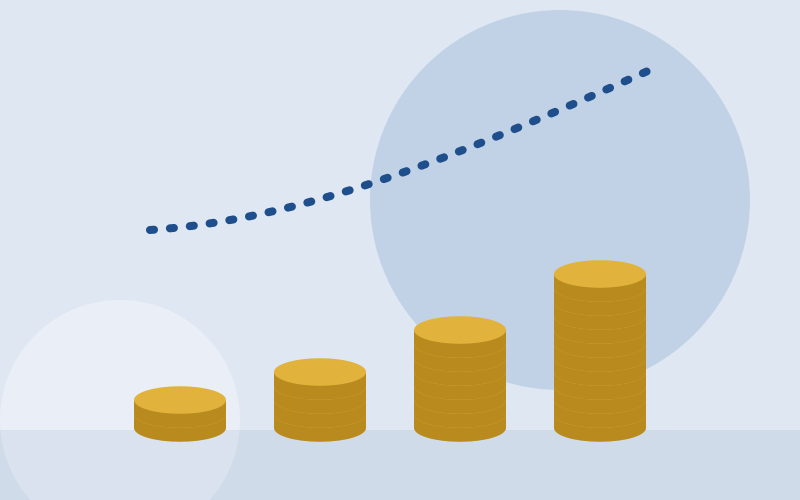
Dollar-cost averaging means investing the same amount at regular intervals, regardless of price. You automatically buy more shares when prices are low and fewer when they’re high, and you avoid trying to time the market.
How it works
Say you invest $200 every month into a fund. When the price is lower, $200 buys more shares; when it’s higher, it buys fewer.
Many people already do this through regular retirement contributions from each paycheck.
The main benefit: discipline
It removes the pressure of deciding when to invest and reduces the risk of putting everything in right before a drop.
It also helps build a steady habit.
What it doesn’t do
It doesn’t guarantee a profit or protect against losses in a falling market.
If you already have a lump sum, studies suggest investing it at once has often done better historically, since markets have tended to rise over time — but spreading it out can feel easier emotionally.
Automate the contribution so it happens without a decision each month.
Frequently asked questions
How often should I invest?
Monthly or each payday is common. Consistency matters more than the exact interval.
Do fees matter?
Yes. Make sure frequent small purchases don’t trigger high transaction fees.
This guide explains a general concept; it isn’t a recommendation to buy, sell or borrow. For decisions about your own money, consider speaking with a licensed financial professional.